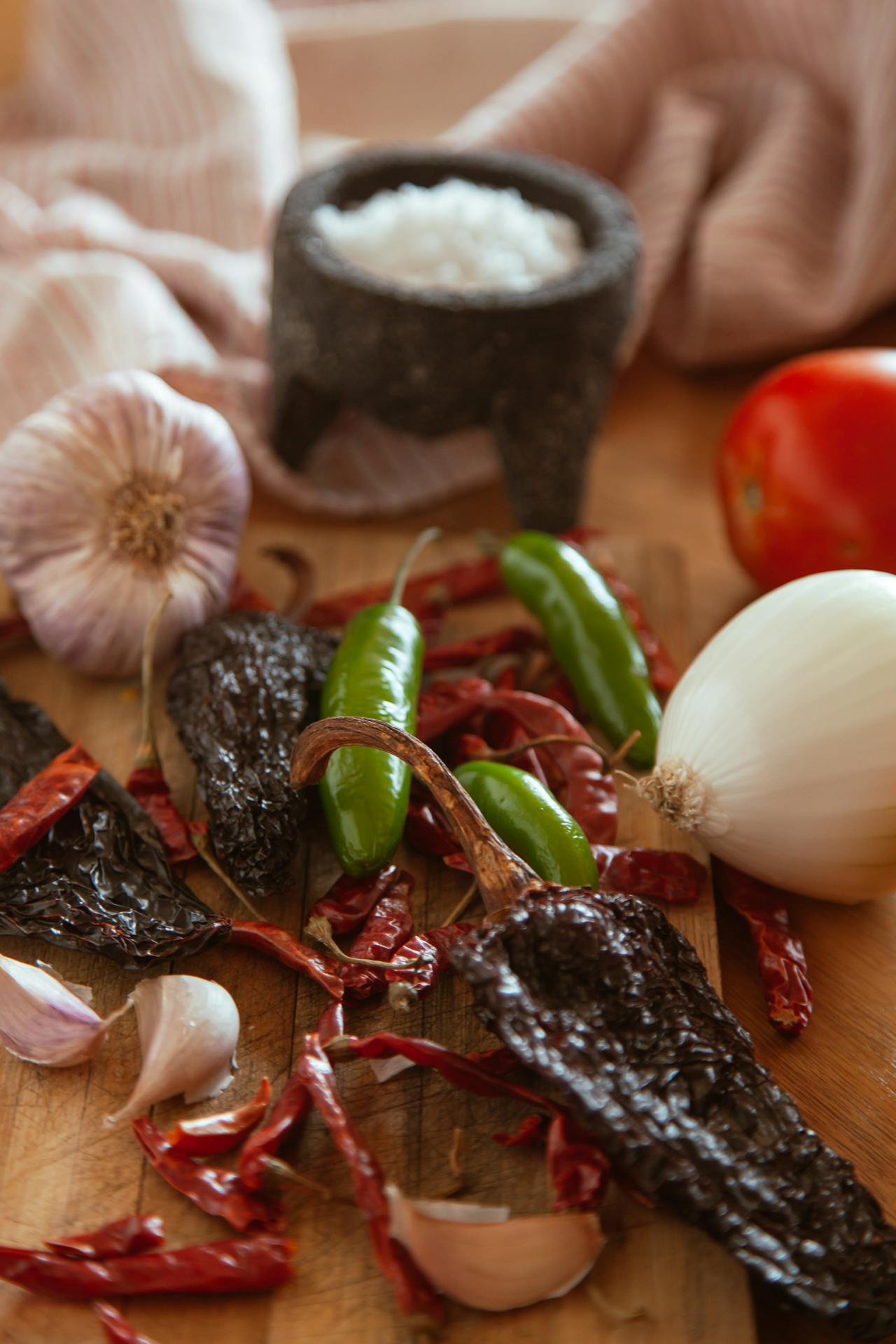
Ancho, pasilla, mulato, chilhuacle, every chile has a personality.
If you’ve ever stepped into a Oaxacan kitchen, you already know: chiles aren’t just ingredients, they’re storytellers. They carry history, geography, and generations of flavor in every wrinkle and seed. In Oaxaca, dried chiles are the backbone of some of the most iconic dishes (hello, mole), and learning how to use them is like unlocking a whole new level of cooking.
So let’s break it down. Whether you’re building your pantry or leveling up your recipes, here’s your go to guide to the essential dried chiles and how to use them like you mean it.
🌶️ Why Dried Chiles Matter
Drying chiles isn’t just about preservation, it transforms them. Fresh, grassy heat becomes deep, rich complexity. Notes of chocolate, tobacco, dried fruit, and earthiness come forward, making dried chiles perfect for sauces, marinades, and stews.
In Oaxacan cuisine, dried chiles are often blended, toasted, soaked, and layered together to create something truly magical.
🔥 The Core Chiles You Should Know
Ancho Chile (The Comforting One)
Flavor: Mild heat, sweet, raisin like, slightly smoky
Best for: Mole, enchilada sauces, marinades
Anchos are dried poblano peppers and are one of the most approachable chiles out there. They bring warmth without overwhelming heat, making them perfect for building flavor depth.
👉 Keep this stocked if you love rich, slightly sweet sauces.
Pasilla Chile (The Sophisticated One)
Flavor: Medium heat, earthy, cocoa like, slightly bitter
Best for: Moles, salsas, soups
Long and dark, pasillas add complexity and a subtle bite. They’re often used alongside other chiles to balance sweetness with depth.
👉 Think of pasilla as your “flavor enhancer.”
Mulato Chile (The Bold One)
Flavor: Mild to medium heat, chocolatey, licorice, smoky
Best for: Mole negro, complex sauces
Mulato chiles look similar to anchos but are darker and richer in flavor. They’re essential in traditional Oaxacan mole recipes.
👉 If ancho is sweet, mulato is deeper and more mysterious.
Chilhuacle Chile (The Rare Gem)
Flavor: Complex, aromatic, slightly spicy, deeply earthy
Best for: Authentic Oaxacan mole (especially mole negro and rojo)
This is the crown jewel of Oaxacan chiles and one of the hardest to find. Chilhuacle chiles are native to Oaxaca and deeply tied to its culinary identity.
👉 If you ever get your hands on one, treat it with respect. This is heritage in chile form.
🧑🍳 How to Use Dried Chiles (Like a Pro)
Before you toss them into a recipe, here’s how to unlock their full potential:
- Toast them lightly
Heat them on a dry pan for a few seconds per side until fragrant. Don’t burn them, bitterness is not the goal. - Remove seeds and stems
This helps control bitterness and texture. - Soak in hot water
Let them soften for 10 to 20 minutes. - Blend into sauces
This is where the magic happens, smooth, rich, deeply flavorful bases.
🧂 Pantry Staples: What to Always Have
If you’re just getting started, keep these on hand:
- Ancho
- Pasilla
- Guajillo (bonus: bright, tangy heat)
If you’re ready to go deeper:
- Mulato
- Chilhuacle (when you can find it)
🌺 Honoring the Culture
Oaxacan cuisine is one of the most diverse and celebrated in Mexico and its relationship with chiles runs deep. These ingredients aren’t trends, they’re traditions passed down through generations, often prepared by hand with care and intention.
Cooking with dried chiles isn’t just about flavor, it’s about connection. To land, to culture, and to the people who have preserved these techniques for centuries.
🌶️ Final Thought
Every chile has a role. Some bring sweetness, others depth, others heat, but together, they create harmony.
So next time you’re in the kitchen, don’t just add a chile, build with it. Layer it. Respect it.
That’s the Oaxacan way.
And now, it’s yours too.